Health and Safety Policy for Flat Clearance Yiewsley
The following policy sets out the commitment of our flat clearance operations to maintain high standards of safety and compliance across our rubbish company service area. This document applies to all staff, contractors and anyone working on-site during clearances. It outlines responsibilities, core procedures and monitoring processes to reduce risk during waste removal and flat clearance work. Our priority is to protect people, property and the environment while delivering efficient rubbish removal services.All employees must be familiar with this policy and the specific procedures for their roles. Management will ensure resources and training are provided so that every team member can carry out safe waste collection and clearance tasks. Compliance with statutory duties and best practice in the waste collection service area is mandatory. Regular reviews will be scheduled to keep this policy current and effective.
 Risk assessment is central to our approach. Before any flat clearance job begins, a documented assessment will identify hazards such as manual handling risks, sharps, hazardous materials, structural instability, access constraints and traffic risks when loading vehicles. Controls include task planning, safe systems of work and use of appropriate PPE to reduce exposure. This assessment applies whether we are operating within a small residential block or wider refuse removal service area.
Roles and Responsibilities
Managers are responsible for implementing and enforcing this safety policy and ensuring that the rubbish clearance workforce receives adequate training. Supervisors must conduct pre-job briefings, confirm that risk controls are in place and ensure that equipment is inspected. Workers must follow safe working practices, wear required PPE and report unsafe conditions immediately. Everyone is empowered to stop work where immediate danger is present.Contractors and sub-contractors working within our waste management service area will be required to demonstrate competency, hold appropriate insurance and align with our safety standards. Safe vehicle operation and loading procedures are essential; drivers must ensure loads are secured and adhere to weight limits to prevent roadway incidents and damage. Strong emphasis is placed on correct segregation of materials to avoid cross-contamination and reduce disposal risks.

Personal Protective Equipment, Training and Competence
Provision of PPE such as gloves, eye protection, hi-visibility clothing, steel-toe boots and suitable respiratory protection where needed is part of standard practice. Training covers manual handling techniques, hazardous waste identification, spill response and infection control for contaminated items. Recurrent training sessions and competency checks help maintain standards across the whole rubbish company territory, including teams covering multiple service zones.Emergency procedures are clearly defined: first aid provision, incident reporting, spill containment and evacuation plans are all documented and rehearsed. Accidents and near-misses are investigated promptly, with corrective actions taken to prevent recurrence. We maintain an incident log and review trends to inform improvements to our refuse collection and clearance processes.
Waste segregation, storage and transport arrangements follow legal and environmental obligations. Hazardous items such as asbestos, chemical containers, batteries and electronic waste are identified and handled through approved disposal routes. Clear labeling and temporary secure storage prevent accidental exposure. Our approach reduces environmental impact while enabling efficient rubbish clearance operations.
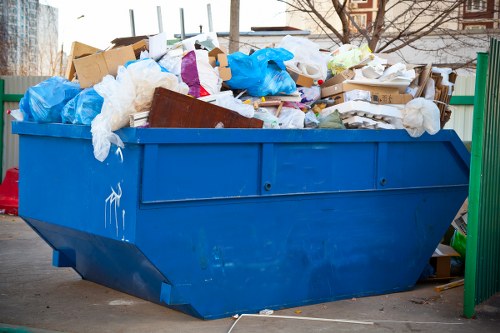 Before work in the final stages, supervisors will complete a safety checklist and ensure clear access for emergency services where required. Continuous supervision during particularly challenging clearances — for example involving loft spaces, basements or unstable fixtures — ensures that risks are managed and workers are supported. Safe systems must be recorded and available for review by auditors and internal safety officers.
 Monitoring, review and continuous improvement are integral to maintaining an effective health and safety culture across the waste clearance and rubbish collection network. Performance indicators, regular audits and staff consultations drive practical improvements. Lessons learned from incidents and near misses are shared across teams to reinforce safe working practices and reduce repeat occurrences.
Record keeping includes training records, equipment maintenance logs, risk assessments and incident reports. These records are retained in line with regulatory requirements and are used to demonstrate compliance and inform periodic policy reviews. The organisation commits to transparent documentation and measurable objectives for safety performance.
Conclusion: This policy is a living document that supports safe, lawful and efficient flat clearance work across our rubbish removal service area. By combining risk assessment, training, clear responsibility, and ongoing review, we aim to safeguard people and environments while delivering reliable rubbish clearance and waste collection services. All staff must read, understand and act in accordance with the measures described herein.